
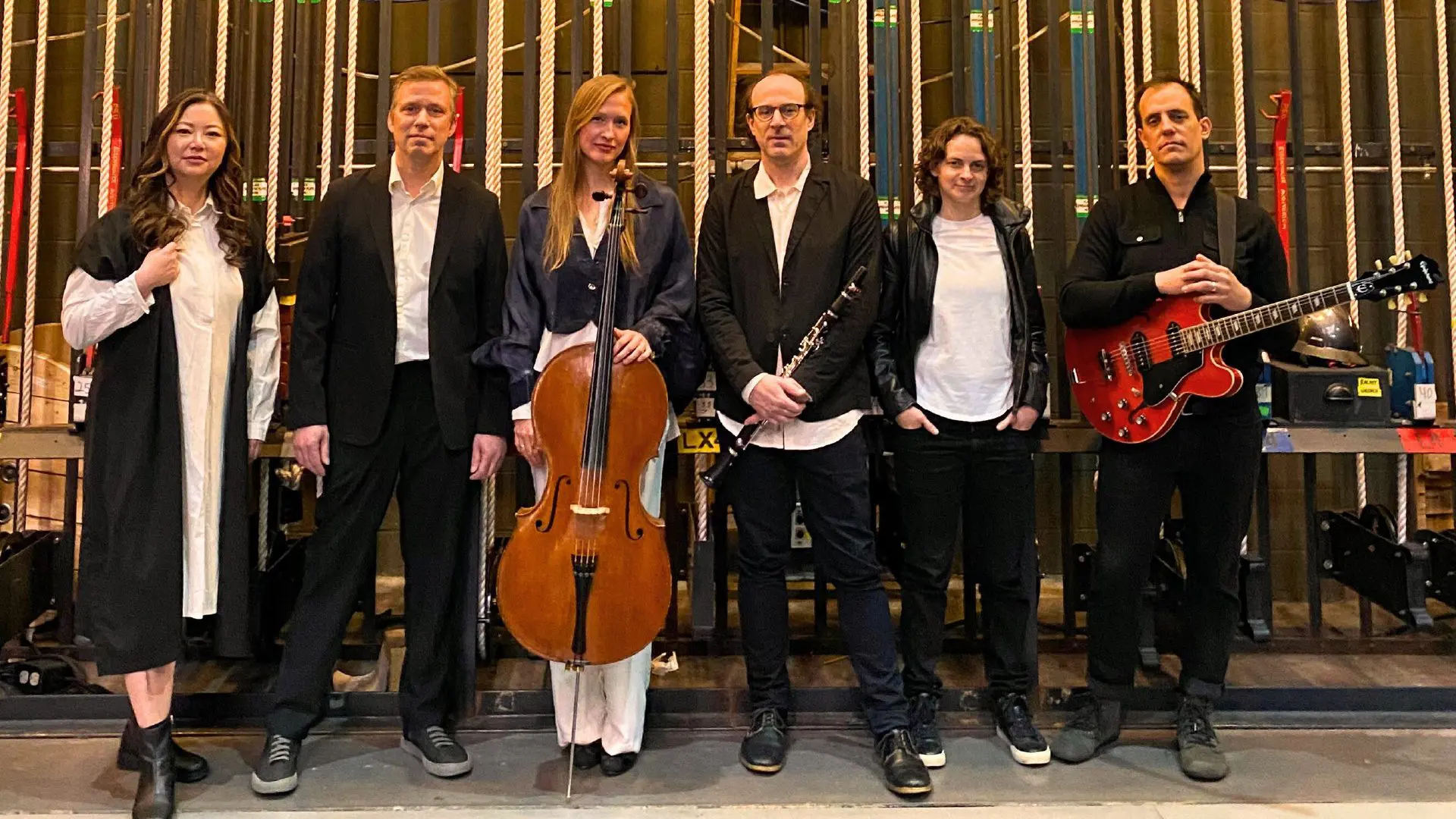
Bang On A Can All-Stars: Julia Wolfe: Steel Hammer
Across four decades, Bang on a Can has become an indispensable American art institution, not only working as a wellspring of and syndicate for new music but also reinvigorating foundational works of the past. When Michael Gordon, David Lang, and Julia Wolfe arrived in New York from Yale in the mid-’80s, the young composers were struck by the way that contemporary classical music felt like a closed system, a few people playing for each other with no hope of sharing it to a wider world. They changed that, beginning with the first Bang on a Can festival in New York in 1987 and extending it in most every direction imaginable for a performing-art organization: a record label, multiple festivals, a program where small donations from patrons pay for audacious commissions, a touring-and-recording band of All-Stars that have spread these sounds to the world’s far-flung places. “They have sustained what may be the most convivial vanguard in modern musical history,” Alex Ross wrote in The New Yorker. “The cult of genius has given way to a ritual of collaboration.” This year at Big Ears, Bang on a Can celebrates four decades with major works from three of its founders and three legendary composers.
Of all the pieces in the vast Bang on a Can repertoire, none is perhaps more audacious and all-consuming than Wolfe’s Steel Hammer. Wolfe has long looked to bygone sources for inspiration, from her use of a centuries-old murder ballad on Cruel Sister to her exploration of Pennsylvania’s benighted coal country on the Pulitzer-winning Anthracite Fields. For Steel Hammer, she sorted through 200 variations on the legend of John Henry and the folk song that shared the tale of his pyrrhic victory against the steam-powered drill out to take his job. Wolfe stitched bits of these assorted tellings together, creating a patchwork where Henry was either white or Black, from Kentucky or South Carolina, big or small. This composite suggests the way images of God can work a little like a mirror for people, so that they see what they need to see in order to make meaning. Wolfe’s complex character study lives inside a likewise complicated musical world, marrying Appalachian folk sounds to avant-garde dissonance and dynamics. Apart from the three singers who deliver these disparate but interconnected visions of Henry, Bang on a Can expands here to include banjo and bones, dulcimer and loads of extra percussion.