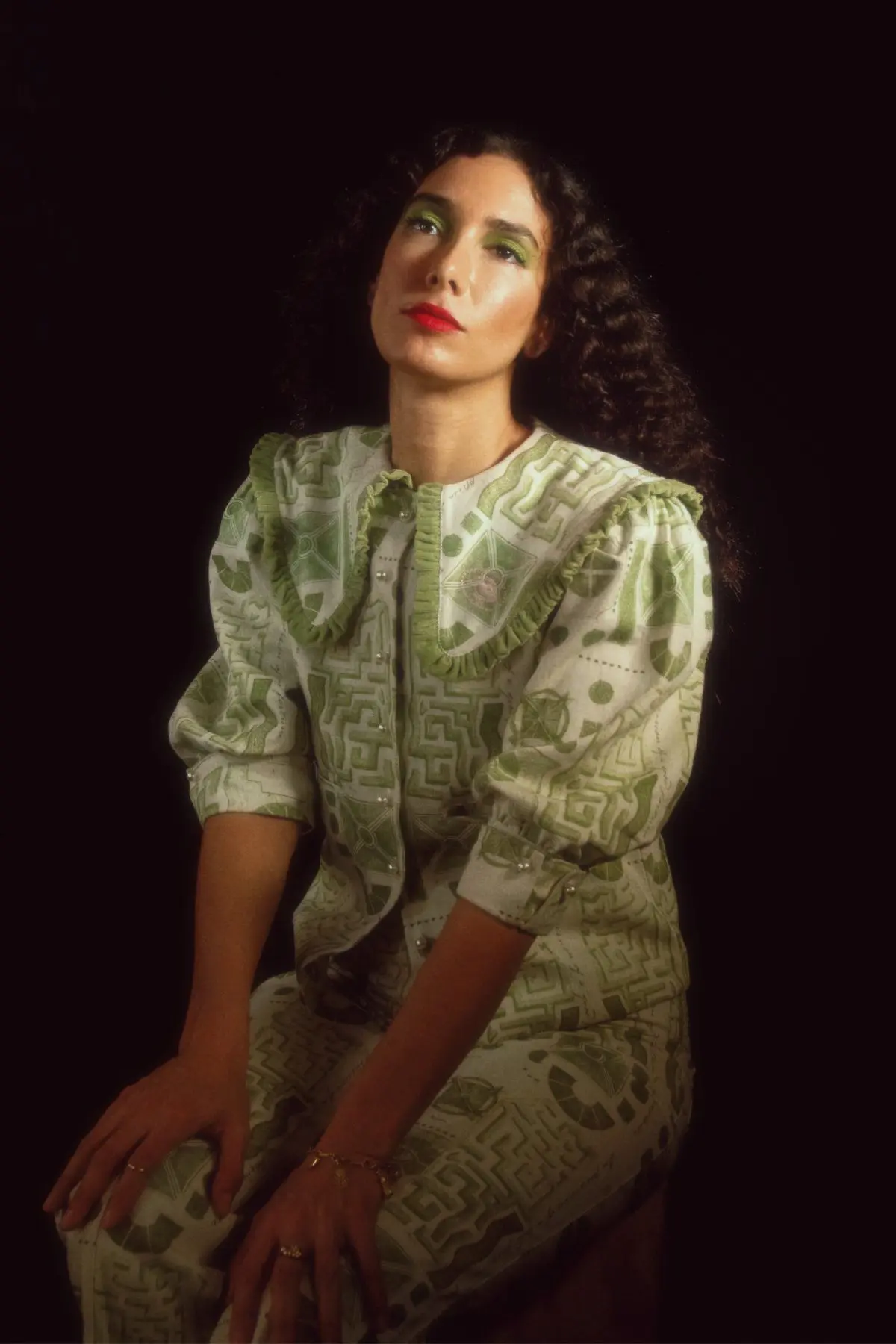
Bedouine
Though Azniv Korkejian’s music as Bedouine has always been beautiful, reflecting the collected light of the Laurel Canyon and Brill Building and private-press folk, her songs have rarely been just soft. Her assured 2017 self-titled debut, for instance, centered on “Summer Cold,” a cutting and questioning reaction to the news that American bombs were in Syrian hands; her gobsmacking 2026 album, Neon Summer Skin, documents the trauma of being ripped from her native lands at 10 and a lifetime spent navigating the fallout. Korkejian was born in Syria, though her family soon fled to Saudi Arabia. She endured the Gulf War in gas masks. Her family emigrated to the United States when she was 10, eventually settling in Texas. After flitting among assorted colleges in order to see the country, Korkejian landed in Los Angeles, bought a pawn-shop guitar, and began writing songs while staring down on Sunset Boulevard as a form of journaling. That led to a record deal, to Bedouine.
In 2019, the year Korkejian issued the graceful and barbed Bird Songs of a Killjoy, Korkejian returned to Saudi Arabia to see her parents, who had moved back after their children were grown. They were leaving for Armenia, so this, she thought, may be her final visit. The songs that subsequently spilled out reckon with the long tail of being forced to leave home in a world of wars, large and small—the way her grandmother sent her mother to an orphanage to avoid an abusive father, the way that some kids worry about summer pool hours while others fret about basic survival. These gorgeous songs are intricately textured, as if strung with the tapestry of Carole King. They convey, though, longings and griefs bigger than romance, as small as childhood.