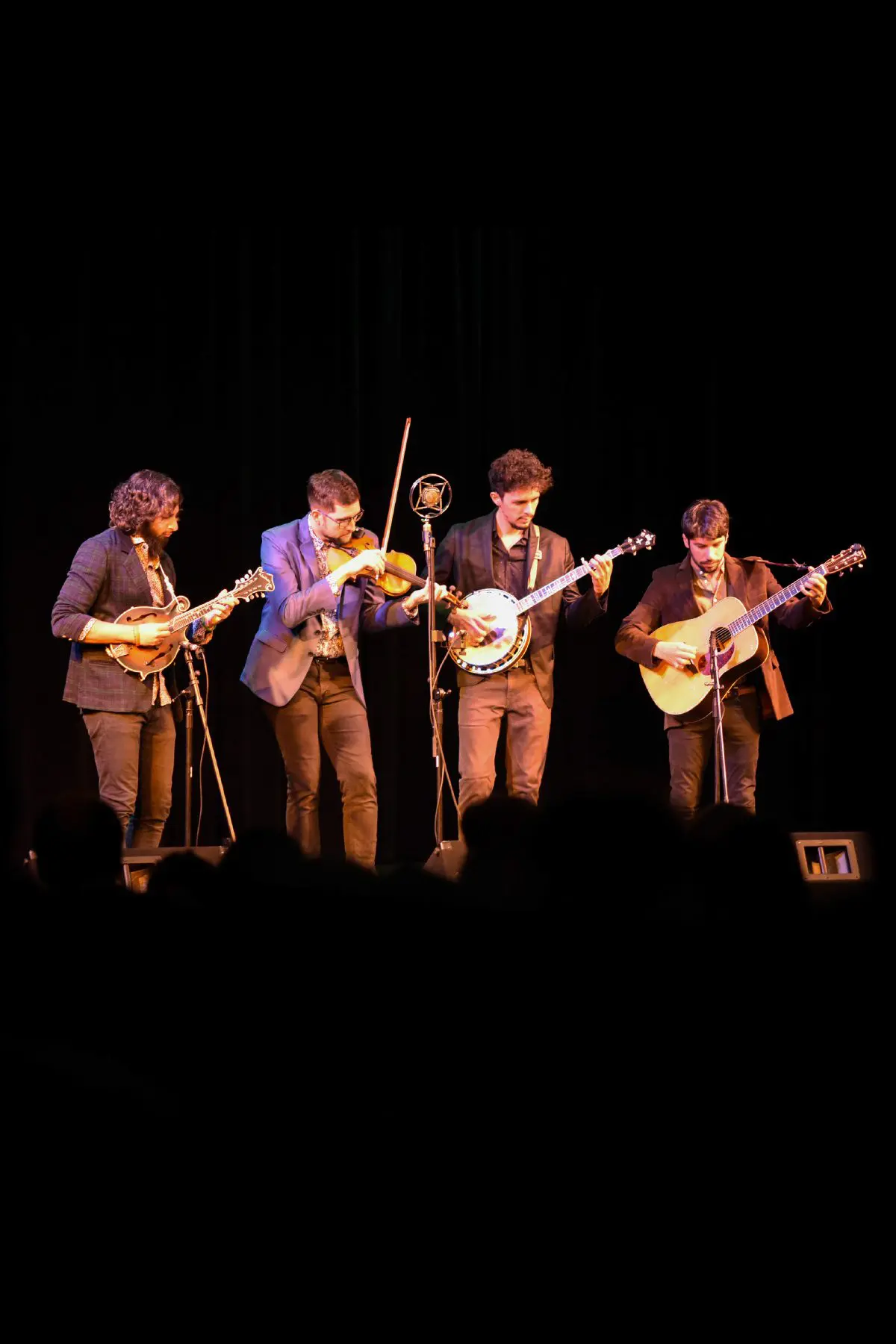
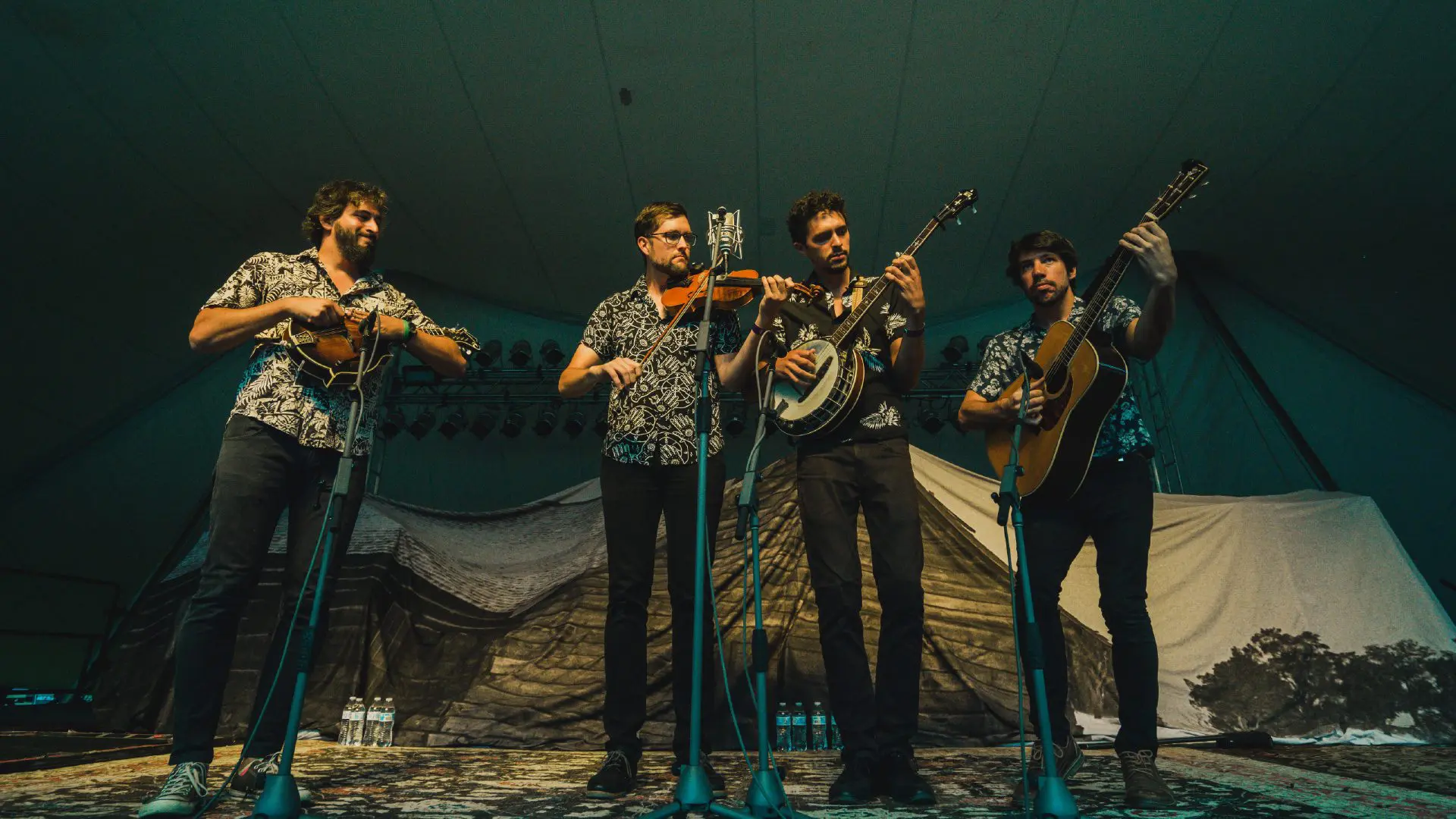
Che Apalache
In a more just and equitable era, the story of Che Apalache would simply be one of a fascinating band breaking geopolitical and genre borders. While Joe Troop was attending UNC-Chapel Hill, he realized the world was bigger than the place he’d grown up and that he wanted to see more of it. He studied Spanish in Spain, taught English in Japan, and eventually headed to Argentina, where he began teaching bluegrass to anyone who was interested in the banjo or fiddle he had taken up as a teenager. As a few of his students began to surpass his own skill level, he started a string-band quartet with them—guitarist Franco Martino, banjo player Pau Barjau, and mandolinist Martín Bobrik. They quickly moved beyond traditional Appalachian sounds, incorporating a salsa thrum beneath the beat of “María” and moving among languages in multiple songs. “Many Latin Americans are deterred by the idea of North American culture,” Troop once said. “We’re advocates for a unified, globally minded America, from north to south.”
But Che Apalache has, of course, not ignored the politics of their moment. On their Béla Fleck-produced 2019 album, Rearrange My Heart, they sang about tearing down the border wall as if they were radicalized Ralph and Carter Stanley, turned the weight of gospel bluegrass against hypocrites using Christianity to be hateful, and sang about a kid living with DACA status in the Appalachian hills like an age-old folk hero. Troop realized he was gay around the time he ventured into the world of bluegrass, so he wields it as a liberatory force now. The pandemic scuttled Che Apalache, sending everyone back to their respective homes; Joe started the duo Larry & Joe with Venezuelan harpist Larry Bellorín. But Che Apalache returns in 2027, in the thick of the second Trump administration, heralding musical calls for equality and kindness once again.