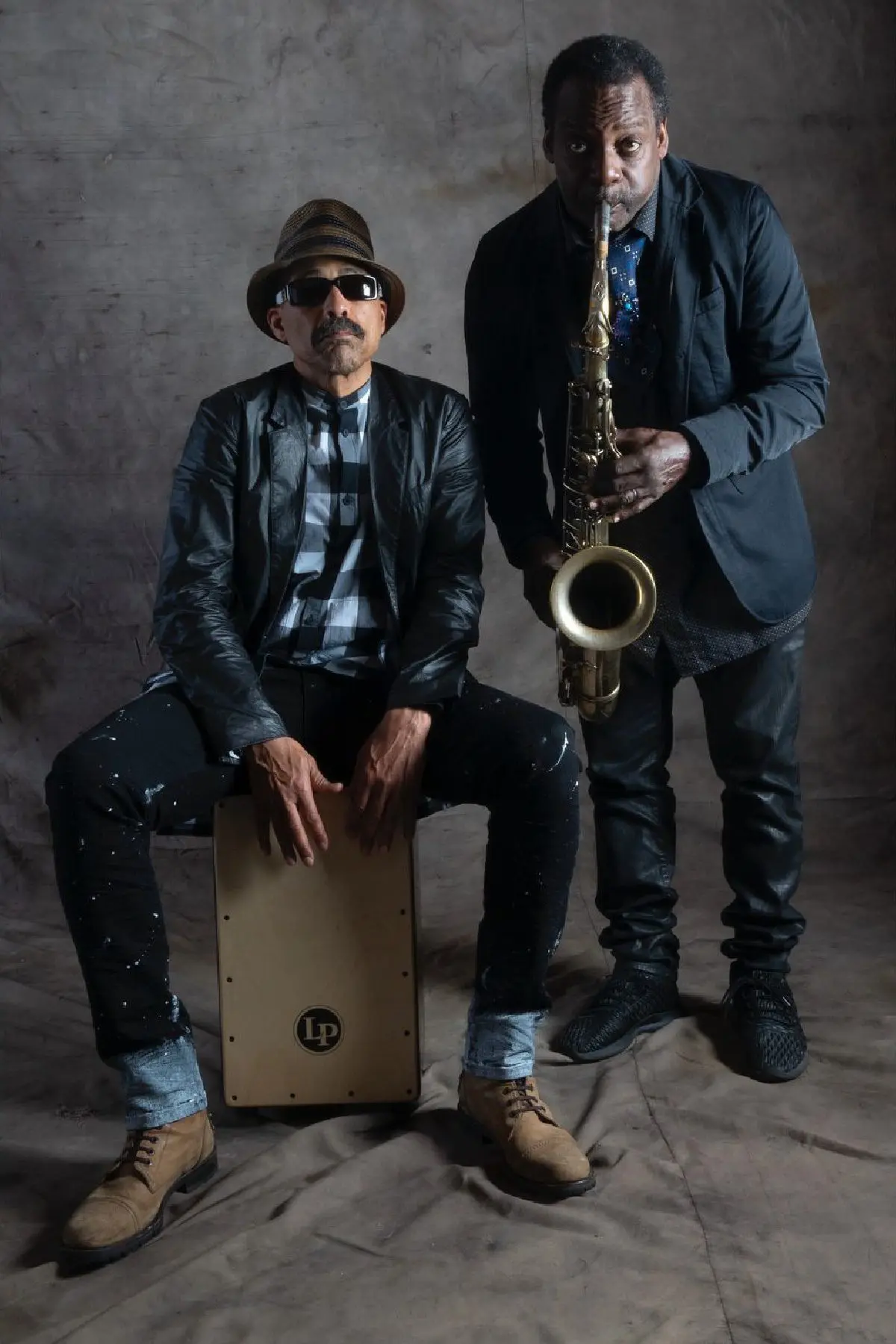
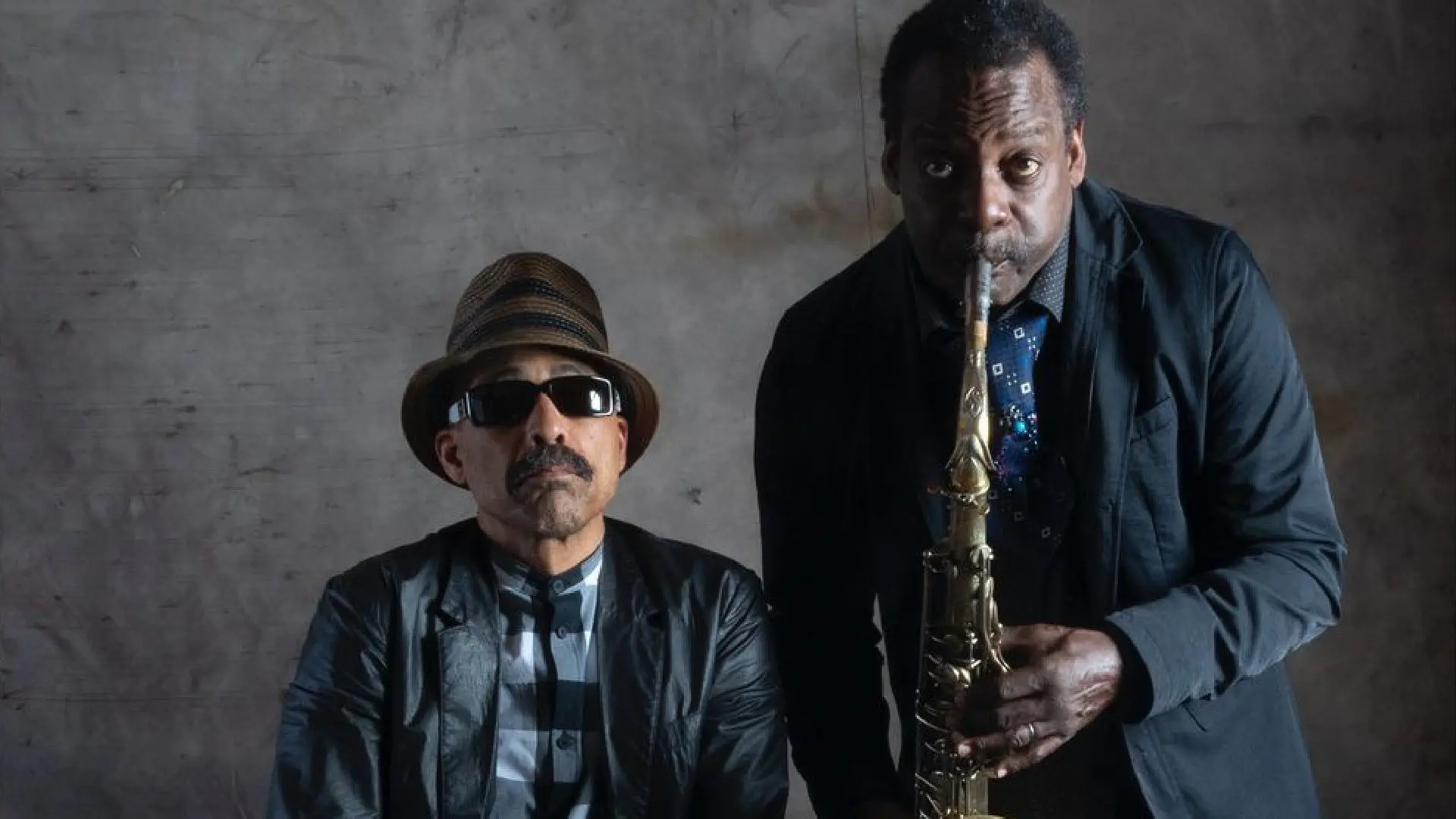
Kahil El’Zabar & David Murray
A year after Kahil El’Zabar founded his Ethnic Heritage Ensemble, in 1974, the percussionist and poet met saxophonist David Murray on a Chicago basketball court. Murray was headed west to study jazz at Pomona College, but he soon became an incredibly busy player, making a string of imaginative solo saxophone records and working with the likes of James “Blood” Ulmer, Jack DeJohnette, and Amiri Baraka. Back in Chicago, El’Zabar—who had started playing professionally as a teenager and already worked with the likes of Dizzy Gillespie and Nina Simone—was newly the chairman of the Association for the Advancement of Creative Musicians. His own ensemble would pull ideas of African polyrhythms and structure into searching, restless jazz. Decades passed before he and Murray intersected on tape; since 1991, though, their relationship has been steady and brilliant, resulting in a string of ebulliently aggressive records.
“I enjoy working with David so much because it makes me prepare, musically,” El’Zabar once told DownBeat. “In the moment, we don’t know exactly what’s going to happen.” Murray admires El’Zabar’s abilities as an ecumenical collaborator: “He can speak everyone’s language. You could be talking to a guru,” he told The New York Times. The two have made several records with octets and quartets, plus a string of LPs as a duo or trio. But the most righteous testament to their half-century of camaraderie may be 2020’s Spirit Groove, captured as they both neared 70. On 20-minute opener “In My House,” El’Zabar slowly builds a thumb-piano rhythm, then buttresses it with springy drums and chants about prayer and acceptance; Murray paints all over it, his bright and fluid horn line dancing with El’Zabar, like two players jubilantly running the court together. El’Zabar and Murray make soul-jazz of the highest order, as free in spirit as it is playful in sound.