
The Melvin Gibbs Ensemble – Nzambici
by the Melvin Gibbs Ensemble
In April 2026, the bassist, bandleader, collaborator, and composer Melvin Gibbs released his first book, How Black Music Took Over the World. Borrowing concepts from environmental biology, acoustic research, physics, geometry, sociology, and history, Gibbs’ tome considered how musical ideas and structures exported from Africa had not only evolved to meet the demands of the oft-oppressive outside world they encountered but how they had, in turn, changed that world, building the firmament of so much modern music and culture. Despite its heady theoretical underpinnings, Gibbs’ book is also deeply personal, tapping his experiences as an instrumentalist (“the greatest bassist in the world,” as Time Out New York once put it) and enthusiast to make these ideas leap off the page and into reality. Indeed, during the last 50 years, Gibbs has worked with Sonny Sharrock and David Byrne, Arto Lindsay and Wadada Leo Smith. He has been a member of the Rollins Band, anchored the enduring and influential Harriet Tubman, and been one vertex of the mighty Power Tools with Bill Frisell and Ronald Shannon Jackson. Like his book, his 2025 album, Amasia: Anamibia Sessions 2, synthesized so many of these experiences into something compelling. At Big Ears 2027, Gibbs presents three projects to explore ideas from Black Music and plays in the Zig Zag Power Trio.
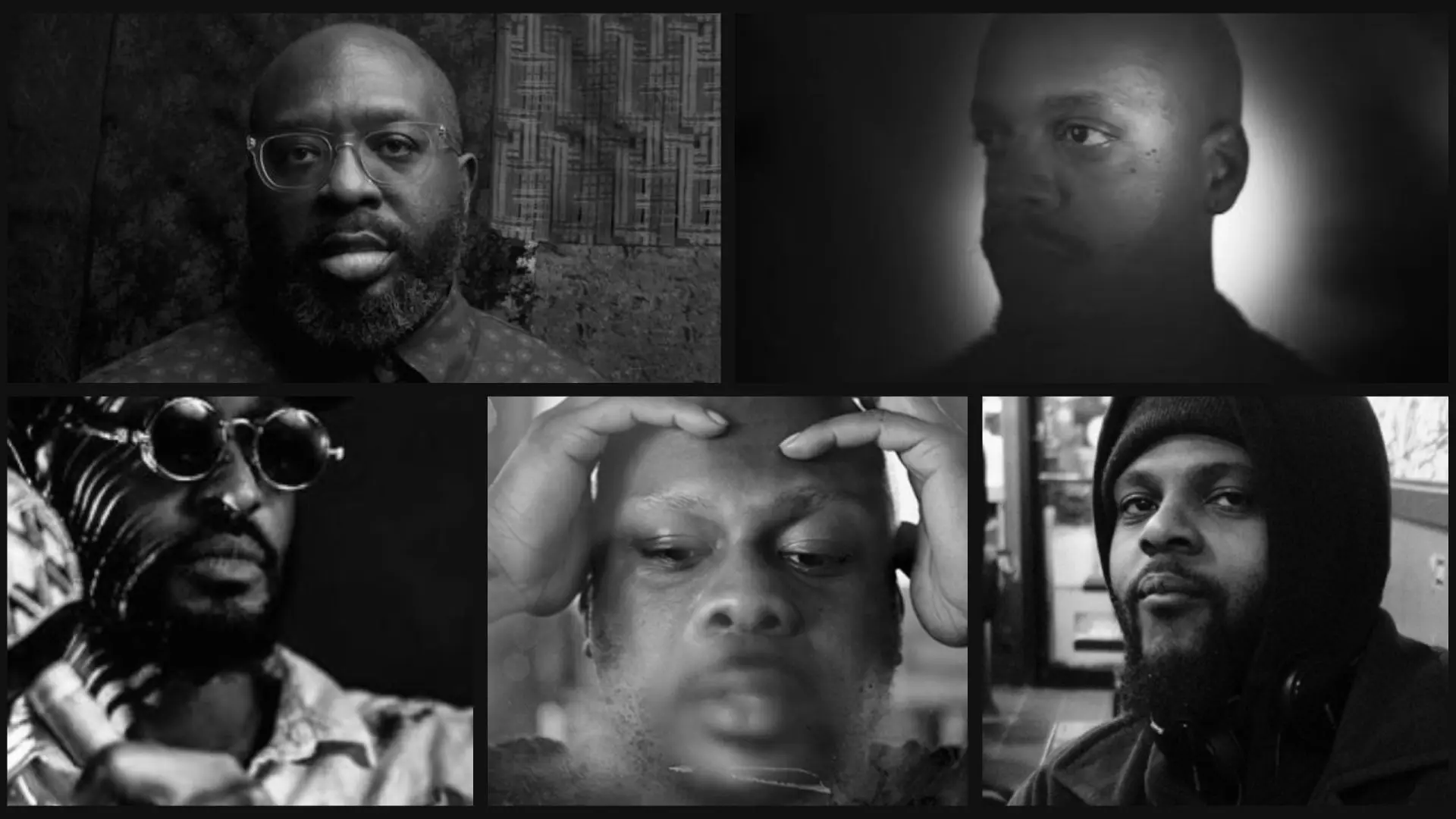
A decade ago, Stephon Alexander—an award-winning theoretical physicist and tenor saxophonist—published The Jazz of Physics, his celebrated attempt to consider some of science’s most vexing questions through the underpinnings and ideals of jazz. Gibbs was one of many curious readers, so he contacted Alexander not only to continue the conversation but also to start a project they called God Particle. That outfit slowly led to Gibbs’ development of a new harmonic system that he used to compose longform works addressing ideas of African cosmology and deities. His second piece in that system is Nzambici, named for the female version of God the Creator according to Bantu Bakongo people. Gibbs doesn’t play in the Melvin Gibbs Ensemble but instead recruited a high-caliber cast of jazz musicians to interpret the new work. At Big Ears 2027, they include bassist Luke Stewart, saxophonist Darius Jones, trumpeter Chris Ryan Williams, keyboardist DeVon Russell Gray, and drummer Tcheser Holmes.
Performers:
Darius Jones: saxophone
Chris Ryan Williams: trumpet/electronics
deVon Russel Gray: piano and keyboards
Luke Stewart: acoustic and electric bass
Tcheser Holmes: drums