
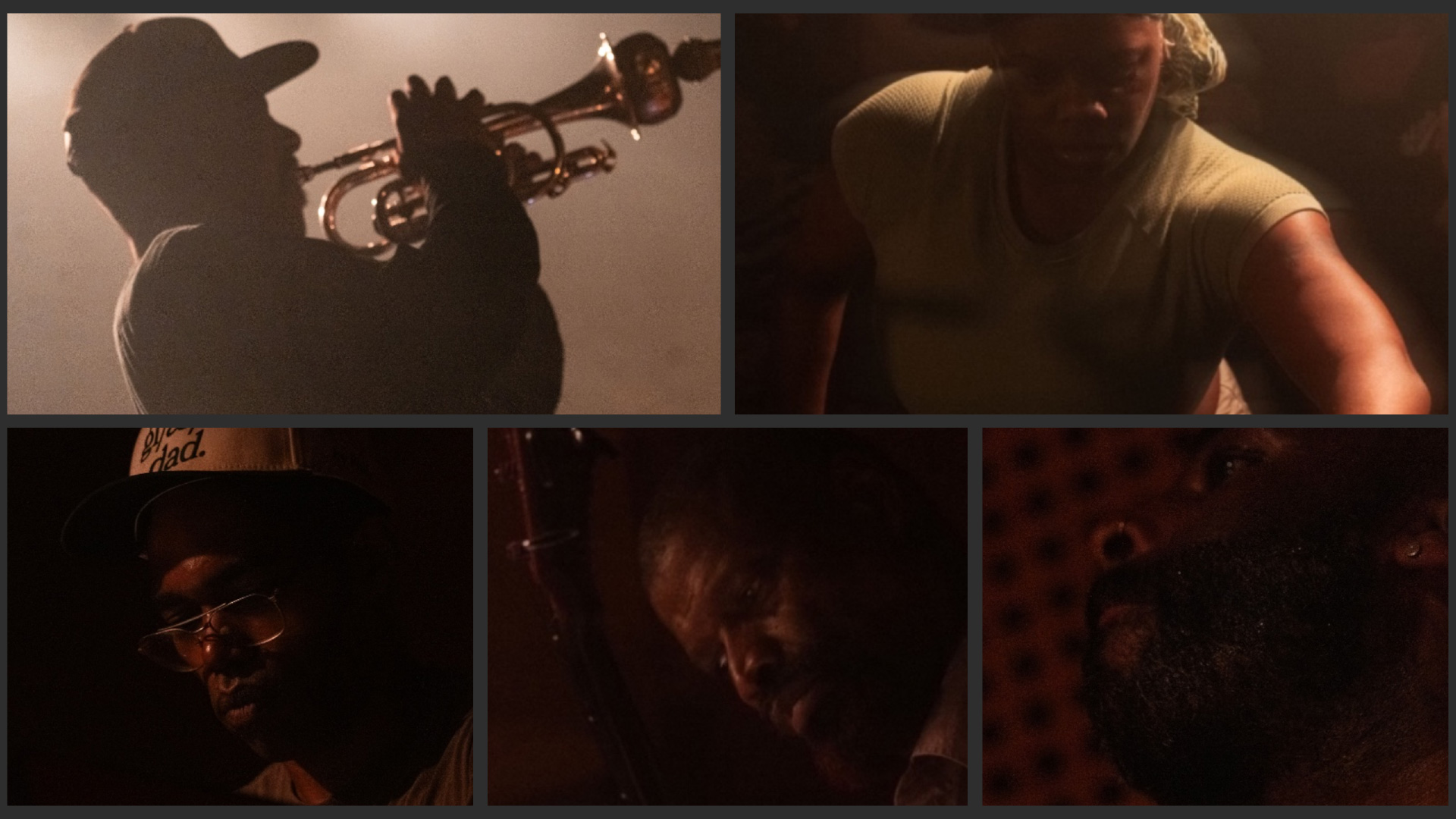
Geechee Reclaimation
In April 2026, the bassist, bandleader, collaborator, and composer Melvin Gibbs released his first book, How Black Music Took Over the World. Borrowing concepts from environmental biology, acoustic research, physics, geometry, sociology, and history, Gibbs’ tome considered how musical ideas and structures exported from Africa had not only evolved to meet the demands of the oft-oppressive outside world they encountered but how they had, in turn, changed that world, building the firmament of so much modern music and culture. Despite its heady theoretical underpinnings, Gibbs’ book is also deeply personal, tapping his experiences as an instrumentalist (“the greatest bassist in the world,” as Time Out New York once put it) and enthusiast to make these ideas leap off the page and into reality. Indeed, during the last 50 years, Gibbs has worked with Sonny Sharrock and David Byrne, Arto Lindsay and Wadada Leo Smith. He has been a member of the Rollins Band, anchored the enduring and influential Harriet Tubman, and been one vertex of the mighty Power Tools with Bill Frisell and Ronald Shannon Jackson. Like his book, his 2025 album, Amasia: Anamibia Sessions 2, synthesized so many of these experiences into something compelling. At Big Ears 2027, Gibbs presents three projects to explore ideas from Black Music and plays in the Zig Zag Power Trio.
Four decades ago, when Gibbs was part of the short-lived supergroup Power Tools, he composed the gorgeous “Wadmalaw Island,” named for one of the Sea Islands in the American South where Geechee and Gullah culture emerged. While he was finishing Black Music, Gibbs learned that his great-grandfather, Solomon Gibbs, had actually been a performer on Wadmalaw when George Gershwin came to see Plantation Echoes, a staged representation of the islands’ arts traditions. That performance informed Gershwin’s Porgy and Bess. In this program of dance and jazz, electronics and archival recordings, Gibbs and his band—trumpeter Ben LaMar Gay, drummer Warren “Trae” Crudup III, keyboardist Paul “Bae” Wilson, and dancer Leslie Parker—not only explore those traditions but reach across generations of Black artistry to pull from the past into the present. Geechee Reclamation, Gibbs has said, “bridges the gap between alive and unalive… recentering the ancestral Afrocentric view of transhumanism.”
Performers:
Leslie Parker: dance/choreography
Ben LaMar Gay: trumpet/keyboards/miscellaneous instruments
Paul “Bae” Wilson: keyboards
Warren “Trae” Crudup III: drums
Melvn Gibbs: bass/Ableton Push