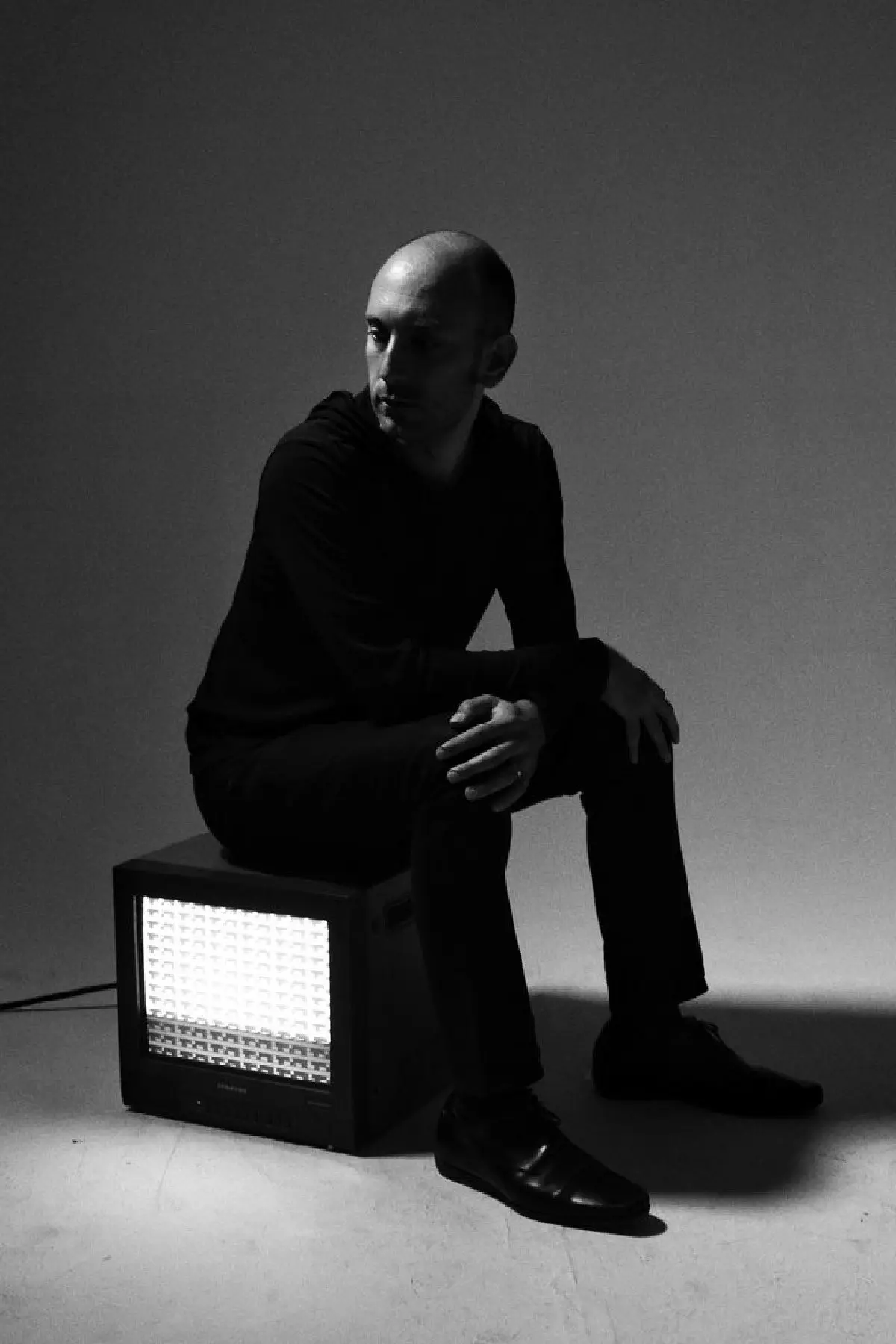
Tristan Perich: Tone Patterns
For a long time, Tristan Perich thought electronics had no place in music. He had grown up playing piano in a house where Philip Glass’s pulsing pieces always seemed to be on. As a young composer, he liked writing for physical instruments, to see his ideas compel a player. But while studying music, math, and computer science at Columbia, he began to consider kinetic sculptures, the way electronics could be manifested physically. This led to the groundbreaking 1-Bit Music and 1-Bit Symphony, the first albums released on microchip, where a listener could plug headphones into a jack embedded into a CD case and listen to the patterns Perich had programmed. He steadily began applying this idea—gritty electronic sounds, built on one bit of information at a time—to complex compositions, where an array of 10 or 50 or 100 speakers issued those tiny sounds as instrumentalists performed the “acoustic” side of works he’d written. “The timbres mesh,” he once recalled. “I thought it was so cool that you couldn’t tell between someone who spent their whole life perfecting their instrument and the most banal electronic sound.” Perich returns to Knoxville to perform a trio of his major works.
Tone Patterns is a rare solo performance from Perich. Building off his explorations of the chaos and control in electronic dance music from his 2016 microchip release Noise Patterns, Tone Patterns finds Perich lording over a complex controller featuring rows and columns of illuminated buttons. He plays them like a virtuosic pianist, electronic tones pouring out of speakers in ways that create vivid harmonies and flashes of dissonance, sometimes canceling one another out and sometimes building into moments that suggest symphonies. The music Perich makes during Tone Patterns is dynamic, enormous, and sustained, like Autechre sampling both the sound and spirit of Charlemagne Palestine to build something astounding